"The car was announced in July 1947. It was completely new with no resemblance to the previous models, and was Standard's first post-Second World War car. It was also the first model to carry the new Standard badge, which was a heavily-stylised representation of the wings of a Griffin.
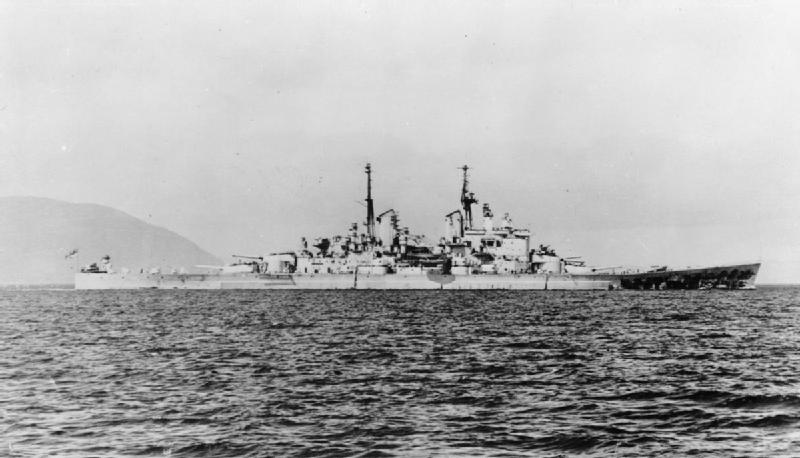
In the wake of the Second World War many potential customers in the UK and in English-speaking export markets had recently experienced several years of military or naval service, therefore a car name related to the British Navy carried a greater resonance than it would for later generations. The name of the Standard Vanguard recalled HMS Vanguard, the last of the British Navy's battleships, launched in 1944 amid much media attention: permission to use the name involved Standard in extensive negotiations with senior Royal Navy personnel."

- A British-made car in its natural habitat, out to pasture -
Das Auto: The Germans, Their Cars, and Us: Dominic Sandbrook is probably one of the most popular British historians writing at the moment, with his weighty books about the history of post-war decades in Britain (a common interest at the moment, David Kynaston, Jennifer Worth, etc). As became apparent in the documentary about The 70s Sandbrook presented last year, he has his own particular corner to argue, all apparent on last night's doc about the German and British car industry ('Autobahn' was obligingly played, though strangely none of the small canon of British car songs, 'Brand New Cadillac' '2-4-6-8 Motorway' 'Wheels of Steel' or, uh, 'Car Song' - very possibly Britain doesn't lend itself to that sort of thing).
Sandbrook's recurrent argument is that Britain has a destiny as a Great Nation, but is continually thwarted by the likes of crusty imperialists naming cars after battleships, management confused at the change of pace in the postwar decades, and unruly militant unions. Sandbrook looks nostalgically to the immediate postwar period when production at Volkswagen was handed over to the British, who made most of their initial earnings supplying vehicles to the occupying forces (the VW is an unusually fated car - Adolf Hitler took a personal hand in developing it, but it is doubtful if any at all would have been affordable during wartime; VWs later became pivotal in the early 60s revolution in advertising as documented by Thomas Frank in The Conquest of Cool).

It is hard to pin down exactly what Sandbrook's about (despite obvious sympathies for eviscerating the unions, he seems to regard Thatcherism as a step to far and an injury too deep), until nearer the end of the car documentary when things become more clearer and more optimistic. Sandbrook heaps acclaim on the few remaining British factories (avoiding the fact most are owned by foreign companies), and seems to be hinting that British car manufacturing is on the rise. Sandbrook is clearly drinking out the same cup as the Free Enterprise Group of Tories, who suggest that it is necessary for Britain to relearn its work ethic, to toughen up and get smarter for the trying economic times ahead. Sandbrook looks nostalgically to Germany with their friendly relations between management and union; in reality the new generation of Tories look eagerly to the working conditions of the country's the West currently exploits, more Foxconn than BMW.
This optimism is punctured somewhat by a seemingly unnoticed slip in production. Sandbrook draws on the nation-spirit of James Bond to illustrate his points about Britannia Unchained. During the 1990s Britain seemed a more power on the slide; Bond in GoldenEye (1995) drives a BMW, consciously choosing a 'superior' piece of engineering. Presently in SkyFall (2013) the Bond franchise partakes to some classy autoretromania by placing Daniel Craig behind the wheel of an Austin Martin. We are once again a Great Nation. Except, much earlier in the programme, Sandbrook makes an admission: none of the Great British car companies are owned by Britain at all. The car Bond demonstrates is brand patriotism with (his patriotic brandism?), is collectively owned by a consortium of Americans, Italians, and Kuwaitis.
Cars have always been a barometer of the levels of belief in a country's nation-spirit. Battleships to rusting death-traps to city trader BMWs. A forgotten story now about the American automobile industry is that around the early 1960s it was believed to have more or less crashed out when: a) production costs became too large; and b) there was a wave of skepticism about the car industry captured by books such as Ralph Nader's or John Keats'.


The American auto industry was saved (in Thomas Frank's telling) by the innovations of advertisers who married the image of the small unassuming VW with a new sense of cool, hip, earnestness that would later become "the 60s". If the efforts of Sandbrook, the Free Enterprise Group, and others are to be observed, Britain's future is about to be tied to a self-image that the original innovators of the VW would have found not very unusual at all.


